El Discurso, esa actualización circunstanciada de la configuración lingüística que conocemos como texto, ha llamado poderosamente la atención de la reflexión lingüística, literaria y filosófica contemporánea con un despliegue que supera ampliamente los presupuestos previsibles en el giro lingüístico de Rorty y en el orden del discurso de Foucault, acuse de la emergencia de una clave de lectura de la realidad contemporánea en el uno y examen del poder cognitivamente constitutivo de la realidad y sus restricciones sociales y culturales en el otro.

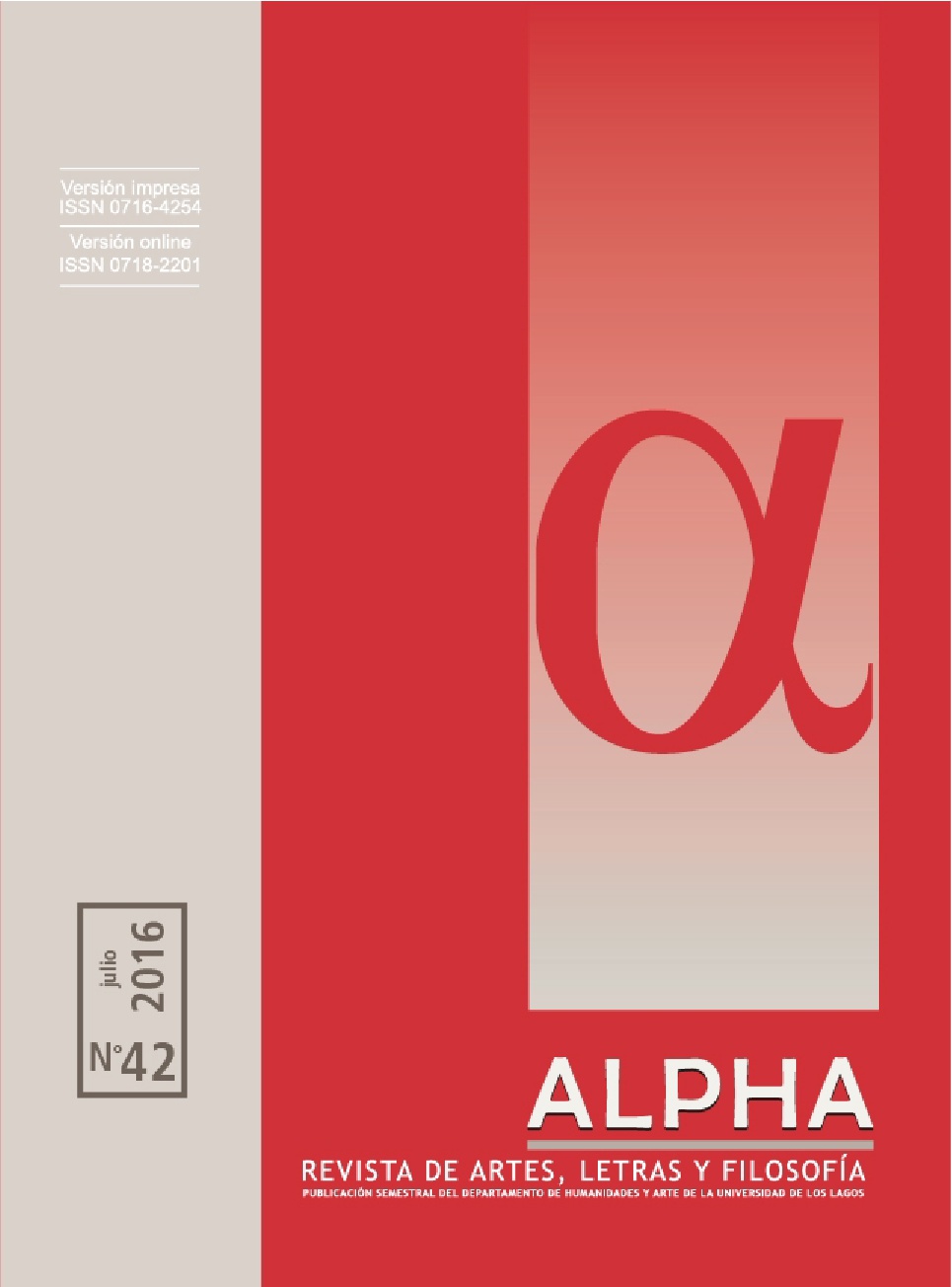
Published: 2016-07-30

Heterogeneity of the masks: between Bakhtin’s carnival and Discépolo’s grotesco criollo

9-23

Polyphony and silence as strategies for denouncing the dictatorship Luisa Valenzuela’s narrative

25-35

Designing female characters in Nineteenth Century Cuban narrative: some notes

37-49

An analysis of Stevenson’s novel based on Jung’s theory of the Shadow archetype in The strange case of Dr. Jekyll and Mr. Hyde

51-76

Movement, space and language in Paul Auster’s City of Glass

77-92

Lexical heterogeneity in Relaciones Geográficas of the Government of Yucatán

93-108

The notion of Mapuche “divinity”according to Sermón en lengua de Chile (1621) by Luis de Valdivia: an ethnocentric interpretation of indigenous otherness

109-123

Manuel Puig’s canonization process in the context of end of the century Latin American narrative: system and literary change

125-143

Literature and the press: the writer’s column in Chile

145-161

The truth as aletheia, a tragic issue in Sophocles’ Oedipus Rex Iván

163-176

Fausto Reinaga’s reading of Frantz Fanon: culture, revolution and new humanism

177-196

Phenomenological convergence and conceptual articulations between the notion of acedia in Evagrio and the notion of fall in Heidegger

197-214

Perspectives on Rodolfo Kusch’s philosophy: method, popular approach and indigenous people as questioning horizons in Latin American philosophy

215-232